

We are now in 2025, and misogyny is still playing a significant role in corporate America. In the previous article “Misogyny Unmasked: Power, Politics and The Industry That Silences Women,” it was discussed how 58% of Gen Z women are least confident in managers showcasing women in the workplace to ensure the same visibility as men.
According to an article titled “Women are a rising share of U.S. managers and professionals in Pew Research Center that Women hold a rising share of high-paying occupations in the United States. They are also a growing share of managers and professionals.
In 2023, 46% of all managers in the U.S. were women. This is up from 29% in 1980 but still slightly lower than the 49% of all workers who were women as of 2023.
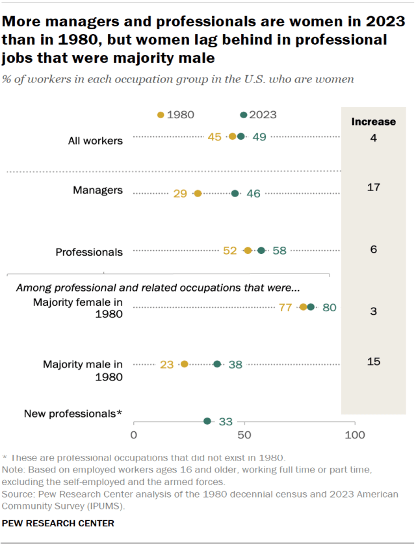
Women’s presence in male- and female-dominated professional occupations
Some professional occupations were made up mainly of women in 1980, but more were majority male. Women’s presence across these occupations today is uneven.
- Women continue to make up a large share of the 28 professional occupations where women were the majority of workers in 1980. In 2023, 80% of workers in these jobs were women, up from 77% in 1980. Some examples of majority-female occupations include registered nurses, teachers and social workers.
Overall, these majority-female professional jobs don’t pay as well as other professional occupations. In 2023, workers in majority-female professional jobs earned $52,000 at the median. By comparison, workers in majority-male professional occupations earned $80,000.
Even though women have come a long way in the workforce, there is still some work that must be done. Gender pay gaps, discrimination and work-life balance struggles still remain the same according to an article “How to Support Women in The Workplace”.
Representation in Leadership
Women are making strides in leadership, but progress is slow in upper-level positions.
- The number of Fortune 500 women CEOs hit a record high in 2024, but women still fill only 10.4% of CEO roles among these companies.
- Among companies of all sizes, women held 29% of C-suite roles and 39% of managerial roles in 2024.
- Women hold less than 25% of senior leadership roles in STEM fields and finance.
In good news for businesses everywhere, though, women’s participation in the workforce is back to pre-pandemic levels. This is not only good for workplace morale but for balance sheets, as well: An eight-year study by Morgan Stanley Research found that companies with more gender diversity generally enjoyed a greater return on equity with lower volatility.
Challenges Women Face in the Workplace
Despite progress, women continue to face major barriers, including:
The Gender Pay Gap
Women earn about 82 cents for every dollar men make, according to Pew Research Center. The gap is even wider for women of color and those in senior roles. While pay transparency laws have helped, true wage equity is still out of reach.
Harassment & Discrimination
Workplace harassment and discrimination remain serious problems. One in three women report experiencing harassment at work, and 42% say they’ve faced gender discrimination in hiring and promotions.
High-profile cases in tech, finance and entertainment underscore the need for systemic change.
What can we do to continue to support women in the workplace?
Pay Equity – Conducting regular pay audits and remote work help all employees balance career and family.
Inclusive Workplaces – implement anti-bias training, establish mentorship programs and provide safe, anonymous ways for employees to report harassment.
Alliance and Advocacy – Actively recognize women’s contributions, amplify their voices and create opportunities for growth.
Flexible Work Options – Hybrid schedules, job-sharing and remote work help all employees balance career and family.
 thekootoureexperience.blog